
IMG 0298prv lo res lo resized 171
Marcia Ruben PH.D., PCC, CMC 

Subscribe via E-mail

Your email:

Posts by category

Leadership Tangles Blog

Current Articles | RSS Feed RSS Feed

What Executive Leaders Can Learn from Fly Fishing Tangles


IMG 1307 resized 600Last summer, we took a road trip from San Francisco, through Zion, Bryce, and on to Telluride, Colorado. While in Telluride, we took a fly fishing lesson from Marty at Telluride Fly Fishers. Marty was a great guide and very patient with this city girl! I had piled on several layers of clothes in anticipation of wide temperature swings in the Rockies.

Marty outfitted us with waders and wader boots. I slathered on gobs of sunscreen, donned heavy duty sunglasses, and a hat for extra protection. I looked like Nanook of the North and collectively we looked like Hans and Frans!IMG 1306 resized 600

Looking the part, I thought I was ready act the part! Besides, I was there in a dual role. As your Tangle Doctor, I recognized the opportunity to observe analogies between fly fishing and leadership tangles! 

Conscious Leaders Create Less Tangles

Marty eased us in to fly fishing by having us first cast from a parking lot next to a stream. Fortunately, I didn't hook any trucks or cars! We soon got the hang of the motion and he took us to the gorgeous river pictured above. I waded in and cast and then reeled the line in again and again. There were a few trees to be wary of and as long as I was conscious of my surroundings, I avoided snagging a tree. In the business world, it takes conscious effort to not get oneself entangled in miscommunication and misunderstandings.

Simple Tangles Happen

Even with expert guidance from our guide, and even after a perfect cast, the lure itself got caught in my line and in a tree. When there were only a few knots, it was pretty easy to find the loose end and separate the lure from the line, untangling the line. I just needed to step back, relax, gently pull on a line here and there, and let the source of the knot emerge.

In real life, it is much the same. When tangles-- unproductive working relationships, snarled lines of communication, and fuzzy lines of authority--show up, leaders, teams and organizations experience eightened emotions, conflict, blame, and "us versus them" thinking and behavior. For these types of tangles, leaders need to step back and figure out where to start, remain patient, try different approaches, and experiment with ways to rebuild trust and collaboration with diverse groups of people.

Sometimes You Have to Cut the Line and Start Over

Back on the river in Telluride, one of my lures got caught in the line and was hopelessly tangled. We tried to untangle the line and could not. There was only one solution. Marty got out his scissors and cut it off. He started over with a new lure and fly. 

In the business world, if the tangles get so bad, and I call these "Strangling Tangles," it is sometimes better to bring in a new team and start over. About five years ago, I did a case study of a company that had been nearly bankrupt, brought in new leadership, and turned the company around. This was only possible because the team that created the knotted mess could not see its way out. A new and bold visionary leader came in, brought in action-oriented leadership, made some tough decisions, and turned things around. 

In fly fishing, I was a beginner and didn't fully get the hang of casting on a river bed, surrounded by big trees. Marty, our guide, was an expert, and he had honed his peripheral vision so that he not only could easily spot fish. He rarely snagged his own line.

But with the right guide, even as a beginner, I was able to avoid all but one strangling tangle. Marty, our guide, was an expert, like the turn-around leader, and he had honed his peripheral vision so he could help me avoid snagging my own line, and show me what to do quickly when it became snagged beyond an easy repair.

If you have snarled lines of communication and unproductive teams, if conflict and misunderstanding gets in the way of productivity; remember to remain conscious and address tangles before they strangle your organization, and also remember, help from a guide may be quite useful. 

By the way, Marty's coaching was expert enough that not only did I learn more about tangles. I was able to catch and release two fish! Less tangles meant more productivity. The same is true in the business world! 


©Copyright Marcia Ruben, Ph.D. Ruben Consulting Group All rights reserved

What Effective Executive Leaders Can Learn from Geese--Lesson 1


describe the imageYour intrepid Tangle Doctor has been tied up, so to speak, implementing new ways to untangle corporate leadership knots and teaching MBA students how to work well together and be effective leaders. So many tangles, so little time! 

Recently, I came across a metaphor first put forth by Dr. Robert McNeish of Baltimore, Maryland. Dr. McNeish was a science teacher who was fascinated by geese, and why they flew together in a V formation. According to McNeish, when geese fly in formation they can take advantage of the "uplift" from the geese in front. Each time the goose flaps its wings, it helps the goose just behind. The effort of one enhances the effort of all. 

What's the human analogy? In one of my earliest jobs, I worked for a Fortune 500 company that sold health-related consumer products. I was part of a team of ten who worked directly with the national sales force. We put on monthly sales conferences all over the country, for 200-400 people at a time. Each conference was a big production and there was no room for error. Four members of our team handled the behind the scenes logistics, while the rest of us traveled the country, facilitating the meetings and being the "face" of the company. We worked closely together to keep the meetings current, and to continually improve the process. 

Our leader was fantastic at creating a sense of family and team spirit. We were each appreciated for the talents we brought and the success of one of us enhanced the success of all. The jobs were both exhilarating and draining, and our leader encouraged teamwork and camaraderie. Like the geese, we flew in formation, educating and motivating our sales force! 

Enjoy the video below. The visuals are stunning and the music is haunting.

Leaders, a team moving in the same direction is likely to have less tangles, that is, less internal strife and conflict. What are you doing to encourage a common direction and sense of community? 


©Copyright Marcia Ruben, Ph.D. Ruben Consulting Group All rights reserved

Leaders--Time to Dress Up So You Won't be Dressed Down?


Silk Suits resized 600Recent research suggests that what we wear impacts how we feel and how we perform. As an executive leadership coach who often works with leaders to enchance their executive presence, this is really helpful information. I often coach women leaders to observe how other senior women, who they perceive as competent and powerful, are dressing. Often the differences, i.e., in accessories, shoes, etc. are subtle, yet worth noting. I sometimes advise clients to change and/or upgrade their wardrobe. I have also advised male clients to make sure that their shoes were polished (I learned this from my grandfather who always said you could tell a lot about a man by the appearance of his shoes.) My clothing advice was based on my own experience in the corporate world and observation. Now, with the power of this research, and recent articles, I feel even more confident in strongly arguing that clothes do make the man and woman!

Further, in difficult, tangled, emotionally charged situations, our perceptions of ourselves and others do influence how we behave. In research I conducted, those who felt powerful and competent, yet viewed others as not, took actions that made the situation more tense and more tangled. Those who felt powerless and viewed others as more powerful and less competent also took actions that added more tension and limited productivity.

I don't believe that the problems of the world will be solved by upgrading our wardrobes. I do believe that understanding the symbolic meaning of what we are wearing, and making conscious choices to wear something that makes us feel our best is a very good place to start. And I have worked with leaders who needed to stifle their urge to dress down those junior to them in the organization. In discussions with them, they dressed down some but not all. Perhaps those who wore their power clothing were not targeted. It is certainly food for thought! 

©Copyright Marcia Ruben, Ph.D. Ruben Consulting Group All rights reserved

Executive Women Leaders--Talk Less to Gain Power?


Quiet (1) resized 600I was astounded to read about the results of a recent study by a Yale university professor. Apparently, women who speak more are perceived as less competent. On the other hand, men who speak more are viewed as more competent. Professor Jennifer Brescoll suggests that how much we talk has implications for how powerful others perceive us to be. The frightening thing about this study is that women may interpret the results to mean that if they talk to much, they will experience a backlash. 

I find this fascinating, because there is also research that suggests that women who speak up less in meetings, slowly over time, are seen as less competent and are not promoted as quickly as their male counterparts.   We all know stories about women who express a good idea early in a meeting, only to have it ignored. A male counterpart raises the same exact idea later in the meeting and is hailed as brilliant. I have had this happen to me and have seen it happen to others. 

So how do we make sense of this and what does this mean to ambitious women who want to move up the corporate ladder in to senior leadership positions? Does it mean that we have to completely muzzle ourselves? Why do we ascribe more power to men who take up more air space than to women who do the same? 

It may be that our social conditioning and hardwiring have predisposed us to expect that women will listen more, be more nurturing, and talk less. These traits are certainly in alignment with emotional intelligence. Knowing how to read others and what to say when surely must trump pure testosterone! In fact, in Brescoll's study quiet women were perceived as more competent than quiet males and almost as competent as talkative males!

I would like to hear from some of you. What do you make of these findings? In your experience, do women need to talk less to rise to the top of their companies? 

©Copyright Marcia Ruben, Ph.D. Ruben Consulting Group All rights reserved

Increase Team Effectiveness--Avoid Violated Values TanglesTM


Violated Values1 resized 600 Executive leadership teams regularly develop values statements to explain what is most important to them in fulfilling the company mission. Teams go through exercises to identify values they hope to live by.

And yet we, as individuals, rarely really know our most important values and what we hold most dear. Our most cherished values are hidden to us as we go through our daily work lives. As your Tangle DoctorTM, I contend that misaligned values are one of the hidden forces or threads of organizational tanglesTM -- unproductive working relationships, snarled lines of communication, and fuzzy lines of authority. Symptoms of tangles include negative emotions, conflict, and blame.

Unconscious Triggers for Negative Emotions

When working with executive leaders I discovered that a violated value can be an unconscious trigger for negative emotions. One executive leader realized that when peers recommended a course of action that cut corners, she experienced a sense of visceral anger. She lashed out at them, causing tension. Peers and subordinates began to avoid her. In our session, she realized that integrity, which to her meant keeping one's word, was a core value, and it was being violated. Our work together involved discussing methods to self-monitor and reflect to avoid over-reacting to that trigger.

When another leader’s company used personal company information in a way that compromised the privacy of its customers, he realized that protecting privacy was of paramount importance. His company's action triggered an emotional response in him. When he angrily raised the issue, the CEO called him on the carpet, because the CEO did not share his value. The CEO valued revenue generation more than protecting privacy. The anxiety this created for my client and others on his team resulted in a lack of trust. In similar situations, the value conflict may be so fundamental that an individual may decide to leave the company.

Misalignment of Values

I call this phenomenon the Violated Values TangleTM. To pinpoint the specific tangle, I always listen deeply to identify the primary threads that need to be unknotted. I do this by listening to the words spoken and emotional content. Once I have determined that the primary thread is misaligned values and that this is indeed a Violated Values TangleTM, I work with my client to pinpoint the specific value. Through an inquiry process we explore together the reasons for the misalignment. I probe to see what other threads are involved. Clearly, in this case, emotions fueled the tangle. I also consider what power dynamics are in play and what else might be knotting things up.

The challenge with this particular type of tangle is that we often don't know what is really important to us personally until it is threatened and we experience a visceral response. To complicate things, we often misinterpret our emotional reaction. We are not really sure what set us off.

Preventing a Violated Values Tangle

Given that the Violated Values TangleTM is defined by hidden forces, there are several ways to prevent them from sneaking up on you.

  • Get to know your own most highly cherished values.

  • When you feel a strong negative emotion, notice if one of the triggers is a violated value.

  • Practice good self-management.  Be aware of your emotional states and moderate your reactions so that relationships maintain intact.

  • If you get off track, and overreact, redouble your efforts to notice what triggers you. When you experience the trigger, take a few deep breaths, think, and then respond in a way that respects the other person.

  • Ensure that your team has clarified individual and team values related to your work together. Determine what is most important to the team in working together under inevitable volatility, ambiguity,  and pressure

  • Develop good conflict management skills to negotiate clashing values

  • While you are calm, prepare a measured, non-threatening response that communicates why this value is important to you.

This blog post is an abbreviated excerpt from my forthcoming book. I will let readers know when it is published.


rubenfreeconsultationredcrop3 If you suspect you already have a Violated Values TangleTM, contact me for a complimentary session.

©Copyright Marcia Ruben, Ph.D. Ruben Consulting Group All rights reserved

When Leaders Struggle with Complex Challenges--Qualifications Matter


Expert.Istock.paid resized 600When you have a toothache, would you consult a car mechanic who took a year-long, part-time course in dentistry, even if you felt he had a knack for it? If your child has a high fever and hacking cough, would you take him or her to your neighbor for treatment, one who has two children of her own, and works as an accountant? Probably not.

In these cases, you would most likely seek out a professional with credible educational training, background, and evidence of mastery in diagnosing and treating your specific issue. Your decision would be based in common sense and an understanding that health issues are complex and require expert care.

Minimal Professional Standards

Yet in the business and coaching world, where the leadership dynamics intertwined with cultural, team, interpersonal, and tough business realities make issues especially complex, there is a lack of real professional standards and barriers to entry are minimal. 

Recently, the New York Times ran an article by Spencer Morgan about a 27 year old woman working as a life coach. She attended a life coach certification program and now has a successful business.

There were over 200 passionate comments posted by readers. One group felt strongly that age and credentials do not determine coaching competency. A second group asserted that the work described could be done by a good friend--why pay someone when you have caring friends who listen and challenge you? A third group passionately argued that some areas of human behavior and some challenges are complex enough that quality control is necessary. These readers passionately argued that having formal, credible knowledge, experience, and training are essential. I agree with the third group, especially when the issues are complex, for example, an executive leadership team with a new leader who must turn around the business and is faced with resistance, and/or the stakes are high; for example when a technically brilliant founder is unable to forge a necessary and collaborative relationship with a new CEO or the integration of two corporate cultures gets bogged down in petty rivalries.

In my field of organization and executive leadership development, many educated in the hard sciences or business claim to be organization development consultants and coaches. Others with formal backgrounds, education, and years of experience in marketing, accounting, public relations or communications claim to be experts in leadership and human behavior. The standards for entry appear low and anyone, sometimes with a flair for hype, can claim to be an expert.

Morgan, in the New York Times article, described life coaching as a process of asking good questions and holding people accountable. To some extent, I agree that this is part of the necessary skill set to be a good “coach.” It is not all that is required.

Consider some of the toughest organizational and leadership challenges:

  • Creating a collaborative environment when hidden agendas, power plays, and “us versus them” attitudes prevail

  • Navigating tough organizational changes

  • Inspiring a team that has to do more with less to stay focused and motivated in a volatile and uncertain environment

  • Leading tricky merger integrations

  • Smoothing out ugly personal dynamics on an all-star leadership team

Merger integrations and strategic change efforts often fail because leaders don’t hire the right help. Leadership development efforts fail for the same reasons. So what is the difference between saying you are a coach and actually being an effective executive leadership coach?

Knowledge Guides Good Questions

A few years back, I enjoyed watching the HBO show, In Treatment. Dr. Paul Weston  a psychotherapist, played by Gabriel Byrne is an excellent therapist who is also in therapy himself, with Gina, played by Dianne Wiest. In one of Paul’s sessions with Gina, Paul believes he has failed as a husband and father and wonders how he can effectively help others. Gina replies that being a parent or husband is very different than being a trained observer of human behavior. They require different skills. Gina reminds Paul, that as a therapist, he has spent years learning his craft. He is formally schooled in the behavioral sciences. He is trained to make observations, ask insightful questions based on his knowledge, make interpretations, and encourage others to look at their patterns of behavior. He draws on a body of empirical knowledge about human behavior to guide his thinking and the questions that he asks.

Being a Parent is not enough to Qualify to be a Child Development Expert

By successfully managing others, individuals absolutely learn about leadership and human dynamics. Being a spouse, one learns about relationships. Being a parent, one learns something about early childhood development.  However, these experiences alone are not enough to become an expert in the fields of leadership development, marital counseling, and/or child development.

Being an Executive Requires Different Skills than being an Executive Coach

When you hire an executive leadership coach to help you navigate tough organizational changes, tricky merger integrations, or to smooth out rough dynamics in your leadership team, it is crucial that you check the consultant’s credentials and experience. Someone with education, years of experience, and background in finance, or accounting, or engineering is not an expert in human dynamics. An individual who has been a CEO may not have knowledge or training in adult learning and development or a deep understanding of relevant psychological theories and concepts. Those with training and business experience in finance or sales are not experts in the nuances of leadership and human behavior.  The field of leadership and organizational behavior is a specialized discipline.

What are Good Qualifications?

Again, I agree with the third group, who say that business experience, knowledge, and acumen are a must to be an effective executive coach. Knowledge of human and adult development, adult learning theory, organizational systems are critical. I also agree with Paul’s therapist from In Treatment that it takes years to learn and master any professional craft.  And finally, I concur that an executive leadership coach must have a vested interest in ongoing personal learning and growth.

The Executive Coaching Forum has what I consider to be a comprehensive and credible list of executive coach competencies, which include a broad range of business, coaching, organizational, and psychological aspects. I recommend reviewing this when considering hiring an executive leadership adviser or coach.

While it might cost less to hire a quasi-expert or seem intriguing to be taken in by charismatic hype, it will cost more in time and money to clean up the mess.

©Copyright Marcia Ruben, Ph.D. Ruben Consulting Group All rights reserved

Backbiting, Leadership Tangles, and the State of the Union


Whispering Secrets resized 600Last night during his State of the Union address,  President Obama spoke about the special forces  who worked as a team to "take out" Osama Bin Laden. His point was that every member of the team was singly focused on successfully completing their dangerous mission. They relied on each other for communication, air cover, and support. When one of the rescue helicopters crashed, they didn't stop and point fingers and blame each other. They covered for each other. They helped each other up the stairs and made sure that every one got out alive. Every member of the team operated with mutual trust.


The behavior he described was diametrically opposed to the way our current Federal government is operating. It is also starkly different from behavior I have observed in many corporations. In fact, the more egos, power plays, backbiting, and hidden agendas, the more likely you are to find leadership tangles--behavior that results in conflict rather than true collaboration.

As President Obama spoke, I thought about some of the research I had done for my doctoral dissertation. Karl Weick and Charlene Roberts described the "collective mind." Their research suggests that when the stakes are high, for instance on an aircraft carrier or nuclear plant, individuals forego their own egos and need for power, and find ways to support each other. There is but one mind.

In my consulting and executive leadership coaching practice, I often find that one of the symptoms of a sub-optimized, or dysfunctional team is backbiting. Individuals break off in to subgroups and talk viciously about each other behind their backs. At the first chance, they may throw each other under the proverbial bus.

Those who are the recipients of backbiting sense the negativity and lack of trust. They often choose to withdraw or fight back. Either way, it is not healthy for the team. One of the solutions that I have found works best is to convence the team, share the feedback about their behavior in a way that is objective and confidential. I then facilitate a process to develop new, more productive norms. Instead of backbiting, address any issues directly with the person with whom you have the issue. If someone comes to you and starts to gossip, send them directly to the person with whom they have the issue. This takes some practice. With time, the backbiting can subside. And leadership tangles start to loosen and not choke the team.

describe the image If your team performance is being undermined by backbiting and other nonproductive norms, contact me for a 15 minute consultation.

©Copyright Marcia Ruben, Ph.D. Ruben Consulting Group All rights reserved

Three Tips for Executive Team Effectiveness


Paper People resized 600Nothing tangles potential organizational effectiveness than a top leadership team mired in unproductive interpersonal dynamics. These manifest as turf wars, political battles, and hidden agendas. The result is a lack of honesty and an inability to raise tough issues. Bad feelings between two key functional leaders trickle down to the rest of the organization. I once worked with a team in which two senior leaders had a visceral dislike of each other. Direct reports two to three levels down felt the tension, and were in turn mistrustful of each other. The result? Gridlock.


In the course of my work as an executive leadership facilitator and coach, and as an adjunct MBA Professor, it is obvious that human dynamics are complex and often messy. Here are three tips that can help executive teams be more effective. 

Acknowledge Power Dynamics

Whether we admit it or not, power is an integral part of human and organizational life. Professor Jeffrey Pfeffer makes a compelling case for acknowledging both the positive and destructive aspects of personal power. Fight it as we may, power is part of the equation. My own research suggests that in the midst of emotionally charged situations, how we view our own power vis a vis others influences how we respond. If we feel powerless and think others are powerful, we are likely to take actions that tangle the relationship. We probably won't state how we really feel, nor will we raise a controversial issue. On the other hand, if we feel powerful and perceive others as equally powerful, we are more likely to raise issues and speak the truth. Awareness of our own level of personal power can make a huge difference in team effectiveness.

Model Skills in Having Difficult Conversations

Most of us have not learned how to productively and diplomatically raise tough issues. We are afraid of ruffling feathers or worse, destroying important relationships. So we say nothing. Bad feelings fester and soon the air is so thick with tension, we either avoid each other or stick to superficial conversation. It is worth learning skills in raising difficult issues. I have found the skills modeled in Stone, Patton, and Heen's work easy to follow and extremely effective. I have used this model with executive coaching clients, executive teams, and with my MBA students, all with phenomenal results. Leaders who can model these skills provide a roadmap for others to emulate.

Expect Civil Behavior

The latest issue of the Harvard Business Review has a fascinating article about a consulting firm with impressive retention rates. The firm leaders attribute their retention success to a maniacal focus on hiring only those with a proven track record of civility. Hiring managers don't just rely on initial reference checks. They use their networks to uncover trails of bad behavior.

I once worked for a global human resource development company that had a robust selection training process. One of the critical components of an effective selection process is knowing the culture needed to execute on your strategy, and then hiring key talent who possess both critical functional skills and who are a good cultural fit. One bad apple does spoil the bunch. Over and over, I have been brought in to companies whose leaders have tolerated bad behavior and are stuck when poisonous dynamics threaten productivity. Better to expect civil behavior and implement consequences for those whose behavior sabotages the success of others.                                    

describe the imageIf you would like to improve your team effectivness, contact me for a complimentary 15 minute consultation. 

©Copyright Marcia Ruben, Ph.D. Ruben Consulting Group All rights reserved

Untangle Leadership Team Knots Through an Extraordinary Game


Diverse Team Stacked Hands resized 600Think of a leadership team as a web of interconnected relationships. Mix in clashing egos, hidden agendas, and lack of trust. Agitate with different personality and thinking styles. Sprinkle in unproductive norms, power plays, and cultural and gender differences. Throw in a propensity to blame. Complicate matters with a complex business challenge--you know the kind--a frightening new competitor that threatens to eat your lunch, declining market share, a scarcity of cash to invest in needed resources--the kind of challenge that only this team can solve. The problem is, this team is mired in what I call a Strangling Team TangleTM. In almost every tangle, and I have named nearly two dozen distinct tangles, you experience unproductive working relationships, snarled lines of communication, and fuzzy lines of authority. Emotions run high and there is plenty of conflict, blame, and “us versus them” thinking and behavior. Sound familiar?

As a Tangle DoctorTM, I am always on the lookout for innovative tools and methods to untangle team knots. Last week, I was in Raleigh-Durham North Carolina and had the opportunity to be certified in Team Advantage--a comprehensive and fun process that unleashes the strengths of a team while at the same time achieving extraordinary results.

Team Effectiveness and Strategic Planning on Steroids

One of the certification trainers called the process "team building and strategic planning on steroids." The process is intense and only for leadership teams that want to untangle the knots that keep them from exceptional performance. If you are happy chugging along with mediocre results and dysfunctional relationships, this process is not for you!

If you want to engage in a process that results in exceptional results and healthy, productive, respectful team relationships, this program will pay for itself. It requires commitment and courage.

The Team Advantage Process

The process, developed by Master Coach DJ Mitsch, is facilitated by two expert level coach/facilitators. The program starts with two months of individual coaching for the team leader. The process is framed as a game as a way to up the ante and create a sense of fun, excitement and to get the competitive juices flowing.

The Game is framed as a four-month stretch goal that under usual circumstances might not seem possible. It becomes a game because it is scored, has a clear strategy, a clear plan, a scoreboard and each step in the plan has a score attached to it. Just like other team sports, it is a game because there is ongoing coaching from the sidelines. All of these elements encourage the team to work together to get things done.

The team process begins with a two-day, in-person kickoff workshop to create effective rules of engagement, expose the hidden tangles that strangle performance, and create and agree to new and productive norms. The team then agrees on  their extraordinary goal. We create a name for the game and a scoring system.  No one wins unless all points are scored. We create action steps to handle inevitable obstacles. The team leader agrees to a prize, anything from a homemade cookout to a trip to a fancy resort.

For the next four months, your team coaches facilitate 12 coaching calls to ensure that the game is running smoothly. They provide coaching on how to work through obstacles, untangle interpersonal knots, and keep the team leader and team on track. The focus is both on reaching the strategic goal and personal and team development along the way. At the end of the game, both the team leader and team have the skills, knowledge, and confidence to replicate their results.

Be the First in the San Francisco Bay Area 

Right now, I am pleased to be the first and only San Francisco Bay Area executive coach/facilitator to offer this innovative team coaching/building process. I would welcome the opportunity to partner with you and a highly motivated team, in conjunction with one of my highly skilled and esteemed Team Advantage partners, to bring the power of this process to your organization.

Click on the link below for a complimentary consultation. I look forward to exploring how an innovative game, customized to meet your most strategic goals, can help you and your team scale new heights.

tangledoctor-mr


©Copyright Marcia Ruben, Ph.D. Ruben Consulting Group All rights reserved

Leadership Wisdom for Executive Leaders--No Excuses--Tip #3


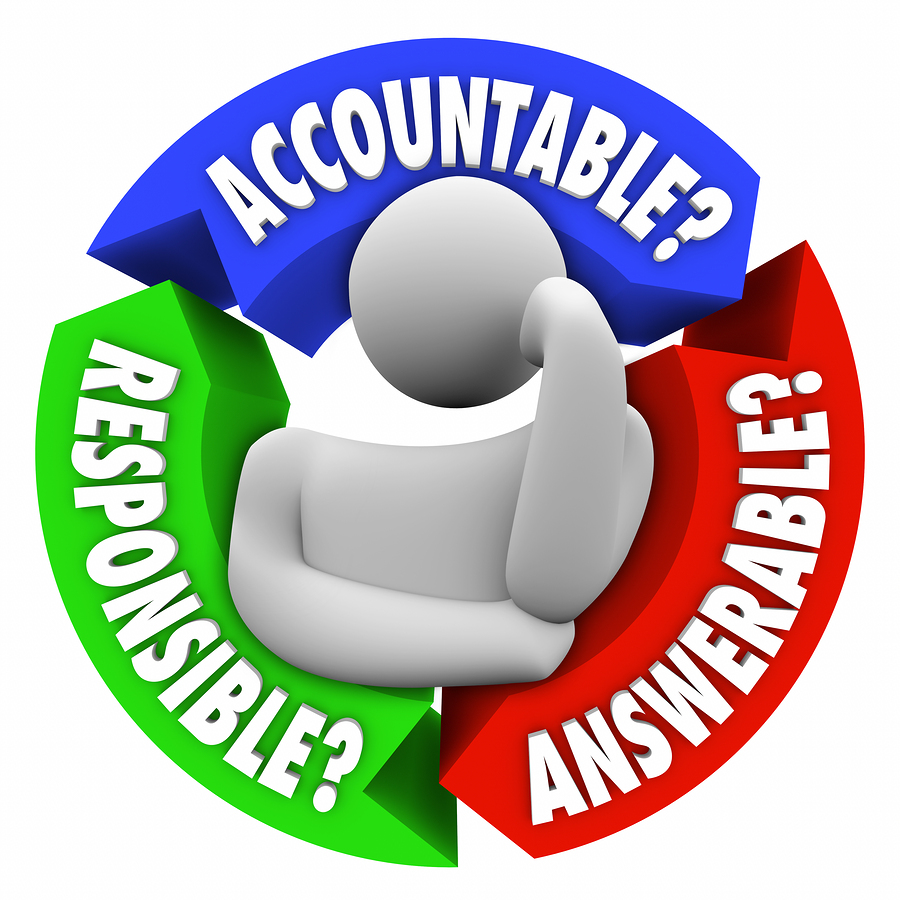
White Collar Worker Attitudes And Actions resized 600It is so easy to make excuses when things don't turn out as you planned. How often are you tempted to point the finger of blame? As an executive leadership coach, I have worked with leaders who have gotten in the bad habit of blaming others and are surprised when they don't get the results that they want.

Star leaders never give or listen to excuses. They want results from themselves and others. They hold themselves accountable for their own results, and expect others to do the same. And rather than assign blame, they try to constructively figure out what went wrong and move forward.

There is power in committing to a result or outcome and being willing to do whatever it takes to achieve that outcome. I have found that just the act of committing and being willing to do whatever it takes results in something akin to divine providence. Resources and people fall in to place.

Leaders who are not stars can list all of the reasons that something can't be done. Have you ever been in a meeting when a bold idea is proposed and then instantly shot down?

How can you overcome the excuse trap?

The first step is to recognize whether you have a victim or accountable mindset. If you have excuses running in your head, you likely have a victim mindset. If you typically say to yourself, "okay, this is tough and I/we can do it" you have an accountable mindset.

When you face a tough challenge, take a deep breath, search your brain for evidence of past success, and commit. Star leaders exude a sense of confidence that is contagious.

©Copyright Marcia Ruben, Ph.D. Ruben Consulting Group All rights reserved
All Posts